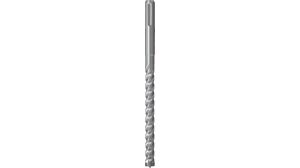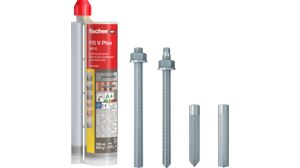
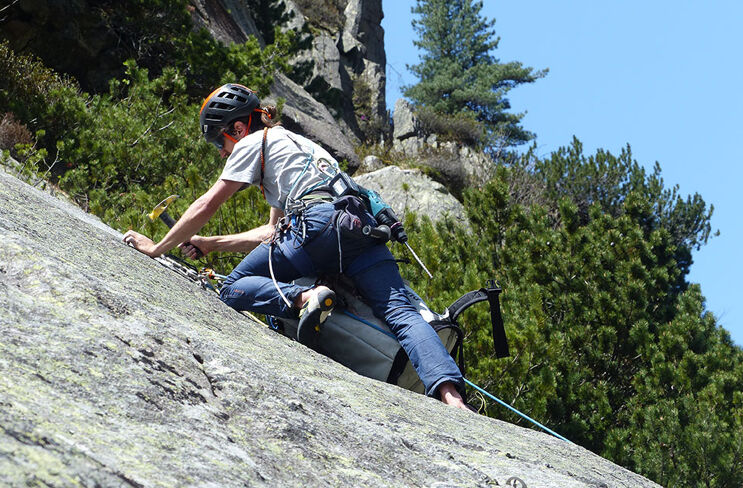
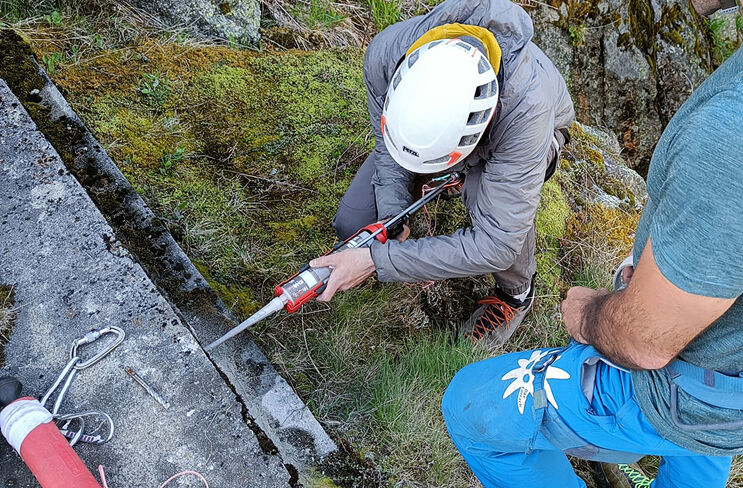
Important during use: Thorough borehole cleaning so that the installed chemical and mechanical anchors achieve their guaranteed load capacities. Afterwards, the climbers mounted two different hook systems. On the one hand, so-called adhesive hooks (also called Bühler hooks) were used together with the fischer injection mortar FIS V 300 T. “The composite system is firmly connected to the rock face and provides long-lasting secure hold,” says Bernd Wetzel. For installation, the climbers injected the fischer injection mortar FIS V 300 T into the borehole using the corresponding fischer dispensing tool, screwed the hooks in, and smoothed out the expanding remaining mortar. After curing, the composite system is fully loadable and achieves permanently high load capacities.

To ensure safety in the mountains, high-quality products like those from the fischer corporate group are essential when setting up climbing routes
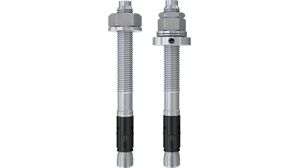
In addition to the adhesive hooks, so-called expansion anchors were also installed in the rock walls. For this purpose, the fischer FAZ II stainless steel (R) expansion anchors in 10 x 80 mm were used. With these mechanical anchors, the climbers securely anchored the 10-mm expansion anchor plates firmly in the rock walls. "Our fischer FAZ II expansion anchors reliably transfer very heavy applied loads to the substrate," emphasizes Bernd Wetzel.
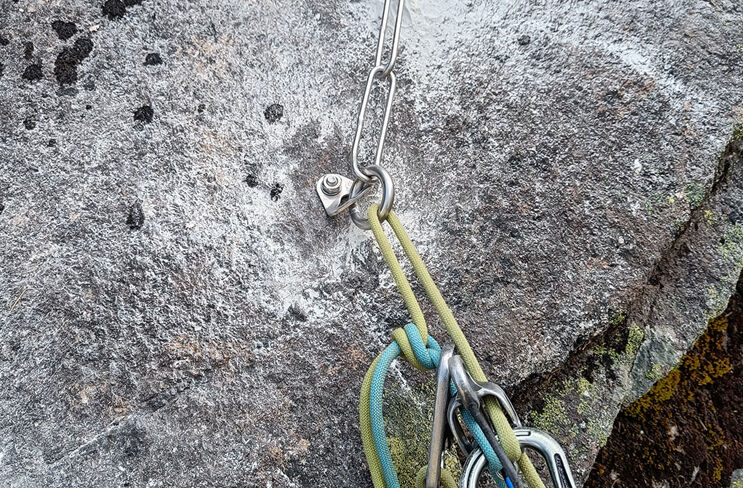
After drilling and cleaning the hole, these can be set either in pre-installation or through-installation. When tightening the nut, the cone bolt is pulled into the spread clip and clamps it against the drill hole wall. Once the specified torque is reached, the anchor is securely set and immediately loadable. Very heavy forces acting on the expansion anchor are reliably transferred to the substrate by the FAZ II expansion anchor. As redirect anchors, the JDAV experts also installed chain anchors with rings or even carabiners. These are used at the end of the route to redirect the rope and lower the climber back down.