The fascinating building is modeled after the inflorescence of a bromeliad native to the Brazilian rainforest, according to the architect. The museum is located in the heart of the newly designed port area of Rio de Janeiro – Porto Maravilha, which is to be developed into an attractive residential area in the coming years. This includes various infrastructure measures in addition to the museum.
By 2026, the number of residents in this historic district is expected to more than double from today's 30,000 to around 70,000. As a new landmark, the building rises on the Pier Mauá far into the harbor basin at Guanabara Bay, on whose western side lies Rio de Janeiro. Five years were necessary to realize the building and the outdoor facilities. The “Museu do Amanhã” is dedicated on 15,000 square meters of floor space to the future of humanity and planet Earth, where art and science are combined in digital installations and games. Rio’s first experimental museum is based on the principle of interactivity between exhibition and visitor. In a 360° dome, visitors experience the creation of the universe in a few minutes. With the help of interactive panels, visitors can learn how their decisions and activities influence the future.
The museum offers 5,000 square meters of exhibition space, and the area in front of and around the museum measures 7,600 square meters. Particularly spectacular are the two huge overhanging canopies that resemble skeletal wings. One extends 75 meters over the Praça Mauá, while on the sea side, the other reaches an impressive 45 meters. A huge semicircular window with radiating struts above the entrance emphasizes the design concept and invites visitors with a grand gesture to enter the 18-meter-high building.
The architectural structure integrates the use of natural energy sources for the operation of the museum. It also focuses on sustainability. Over 4,000 solar panels are installed on the roof structure, which move like wings to capture the best light. The building is cooled using seawater, which is pumped into water basins and filtered before being returned to the sea. To safely construct the elaborate building, the client and planner relied, not least, on fischer's fastening systems. Besides the quality, they were convinced by the technical support of the engineers from fischer's Brazilian subsidiary on site. Additionally, they were impressed by the above-average service that gave them confidence, as fischer Brazil delivered rush orders overnight, thus supporting construction progress.
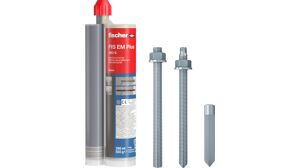
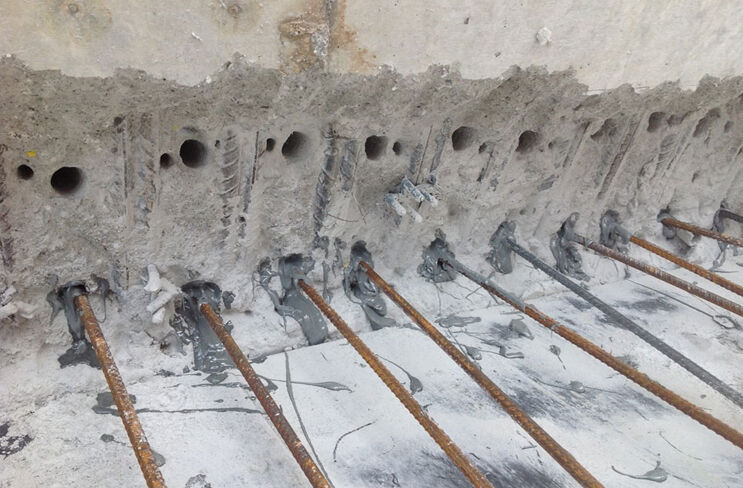
A variety of fischer products were used for the most diverse applications in the "Museum of Tomorrow." Particularly notable are the reinforcement connections in the area of the reinforced concrete columns and the sheet pile walls, which were anchored with the injection mortar FIS EM.